Time:2026-11-06 02:33:21 Source:Sanjian Meichen Steel Structure
Mining conveyor support structures aren't a product selection problem—they're a risk-reduction problem. The real decision isn't choosing between H-beams or box columns; it's figuring out which design assumptions you can safely make given your mine's operational constraints, which manufacturing capabilities actually affect installation success, and which compliance requirements your EPC contractor's engineering team follows. Most procurement managers ask surface-level questions about steel grades and coating systems, but the variables that actually determine project success are span limitations, dynamic load transfer logic, modular prefabrication levels, site assembly constraints, and whether your fabricator's quality system matches the code body your project follows.
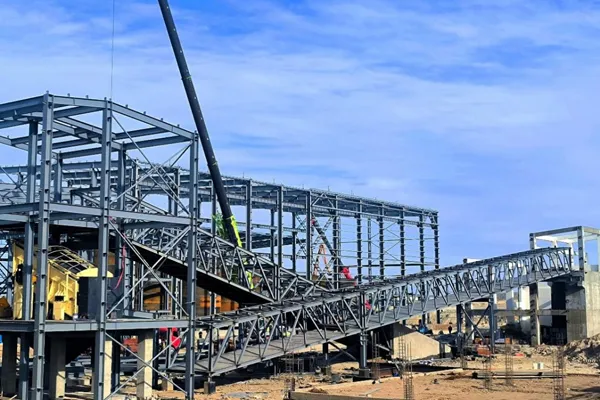
Here's what I wish more customers understood before they start comparing supplier quotations: the "Can you do this?" question skips over the ten decisions that actually matter. Because when you're moving 5,000 tons of iron ore per hour across a remote site with seasonal monsoons and limited crane access, the steel structure holding up that conveyor isn't just holding weight—it's managing variables that most suppliers never ask about.
Most people see steel supports and assume they're similar to building frames or equipment platforms we make for petrochemical projects. They're not. The difference comes down to how loads behave.
Mining conveyor supports must handle continuous dynamic loads from belt movement, material flow, and equipment vibration—not just static dead loads like storage racks or stationary platforms. The structural behavior is fundamentally different: you're designing for fatigue cycles, load transfer through moving components, and vibration amplification, not just weight distribution. Additionally, mining sites often impose environmental constraints (dust, corrosion, temperature swings) and installation constraints (remote locations, limited crane access, phased construction timelines) that building steel structures never face.
Let me break down what this means in practice. When we fabricate steel frames for petrochemical equipment platforms, the load is predictable: a heat exchanger weighs X tons, and that weight doesn't change. We design the support structure, verify deflection limits, and move on. But a loaded belt conveyor introduces variables that keep changing:
Dynamic loading patterns:
Environmental exposure differences:
Installation complexity:
The thing is, when customers first contact us, they usually describe the project like it's a standard structure: "We need 500 tons of steel supports, painted, delivered to site." But if I ask "What's your belt speed?" or "Can you weld on site, or does everything need to be bolted?" they often don't have answers ready. That tells me they're still thinking about this as a product purchase instead of an engineering problem.
The real question isn't whether we can fabricate 500 tons of steel. Obviously we can—our annual capacity is over 50,000 tons. The real question is: Can we fabricate it in a configuration that your site crew can actually install, that matches your project's load assumptions, and that won't corrode through in five years?
That's why the first conversation matters so much. Because if we're quoting based on incomplete assumptions, the structure might meet the drawing specs but still fail during installation or operation.
This is where most supplier evaluations go wrong. Customers ask, "What steel grade do you recommend?" But steel grade is one of the last decisions, not the first one. The first decision is understanding what structural behavior the conveyor system actually requires.
The right structural configuration depends on six primary variables: span length between support towers, dynamic load magnitude and frequency, environmental corrosion class, site assembly method (crane-lifted modules vs. bolted stick-built), transport constraints (maximum shipping dimensions), and connection type (field-welded vs. fully bolted). These variables interact—choosing a longer span to reduce foundation costs might force heavier members that exceed your transport weight limits, or opting for prefabricated modules might require field welds that your site crew isn't certified to perform.
From my experience talking with EPC engineering teams, the decision process usually breaks down like this:
Long-distance overland conveyors typically use 30-50 meter spans between towers. That's the economical range—close enough to limit deflection, far enough to reduce foundation costs. But this assumption changes based on site terrain:
We had one inquiry for an Indonesian coal mine where they wanted 40-meter spans across sloped terrain. Structurally possible, but it would have required 15-meter tower heights on the downslope side. That height created two problems: wind moment loads increased significantly, and crane reach became a limiting factor during installation. We suggested 30-meter spans with intermediate towers—slightly higher material cost, but much simpler installation logistics.
Here's where most customers give us generic load tables without explaining how those loads actually behave. Dead load (belt weight, material weight) is straightforward. But live loads have multiple components:
| Load Type | Source | Structural Impact |
|---|---|---|
| Dynamic impact | Material drop points, belt acceleration | Localized stress concentrations; fatigue consideration |
| Belt tension variation | Start/stop cycles, loaded vs. empty return | Axial forces in longitudinal members |
| Wind loads | Exposed overland conveyors | Lateral bracing requirements; foundation uplift risk |
| Thermal expansion | Temperature cycling | Connection flexibility requirements |
| Seismic loads | Site-specific ground motion | Base connection design; drift limits |
The problem is, most RFQ documents just give us a single load factor: "Design for 1.5x belt capacity." That doesn't tell us whether the material is evenly distributed or arrives in surges. It doesn't tell us if the belt will run continuously or start/stop frequently. And it definitely doesn't tell us if there's a transfer point directly above a support tower where impact loads will be highest.
When we ask these questions, some customers think we're being difficult. But the reality is, a structure designed for steady-state loading might crack under impact fatigue. And a structure designed for worst-case impact might be overbuilt (and overpriced) for steady flow conditions.
This is another area where generic specifications cause problems. Most RFQ documents specify "C4 corrosivity category per ISO 12944" or "paint system suitable for marine environment." But mining sites don't fit neatly into those categories:
The paint system that works for a static offshore platform might fail on a conveyor structure where dust abrasion wears through the coating layer. We've seen customers specify expensive 3-coat epoxy systems (400+ microns DFT), only to find that the finish coat scratches off during installation when steel members rub together during assembly.
For mining conveyor supports, I usually recommend:
The coating decision also affects fabrication sequence. Hot-dip galvanizing happens after fabrication, which limits hole tolerances. Painting happens after blasting, which means any field modifications will damage the coating. These aren't just technical details—they're project execution decisions that affect how fast your site crew can install the structure.
Here's where manufacturing capability and installation logistics intersect. A structure that looks perfect on paper might be impossible to install if your site doesn't have the right equipment.
We fabricate three basic configurations, depending on site conditions:
Fully prefabricated modules:
Stick-built with bolted connections:
Hybrid approach:
Most customers don't specify which approach they need. They just assume we'll figure it out. But this decision changes everything—fabrication sequence, shipping logistics, site crew skill requirements, quality inspection points.
For example, we quoted a project in Mongolia where the customer wanted 8-meter-tall prefabricated tower sections. Structurally fine, but there was no heavy crane available within 500 km of the site. They ended up redesigning for stick-built assembly with smaller members that could be lifted by a 20-ton mobile crane. That added three weeks to the installation schedule but avoided mobilizing a heavy crane across rough terrain.
The point is, the "right" structural configuration isn't the one that looks best on the drawing. It's the one that matches your site's actual constraints—crane capacity, crew skill level, weather windows, and transport logistics.
When customers evaluate steel fabricators, they usually focus on certifications: ISO9001, EN1090, welding codes. Those certifications matter, but they don't tell you whether the fabricator can actually execute your specific project on time and within budget.
Manufacturing capability isn't just capacity—it's the combination of fabrication precision (cutting tolerance, hole alignment, dimensional accuracy), surface preparation quality (blast profile depth, coating adhesion), prefabrication level (how much work happens in the shop vs. the field), and module size limits (transport constraints). These capabilities determine installation speed, field modification requirements, and long-term durability. A fabricator with high capacity but poor dimensional control will deliver structures that don't fit together on site, forcing costly field rework.
From our experience on heavy industrial projects, these are the manufacturing factors that actually affect project outcomes:
This sounds basic, but it's where most problems happen. If a column is 5mm out of plumb, or bolt holes don't line up between sections, your installation crew will spend hours drilling new holes or shimming connections. That's not just annoying—it's a safety risk, because field modifications often bypass the original engineering assumptions.
We control dimensional accuracy through:
For mining conveyor projects with 50+ identical tower sections, dimensional consistency is critical. If the first 10 towers install smoothly but tower #27 doesn't fit, that's a fabrication quality problem, not a site assembly problem.
Mining conveyor supports experience cyclic loading, which means fatigue performance matters. The weld quality requirements are higher than static structures like storage tanks or building frames.
Key considerations:
Weld procedure qualification: Our EN1090 EXC3 certification covers execution class 3, which includes fatigue-loaded structures. Not all fabricators have this qualification—some are only certified for EXC2 (static loading).
NDT coverage: For fatigue-critical welds (main column splices, connection plate-to-column welds), we perform ultrasonic testing (UT) or magnetic particle inspection (MT) in addition to visual inspection. Standard projects might only do visual inspection, but that won't catch internal weld defects that grow under cyclic stress.
Welder qualification traceability: Each welder has a unique identifier stamp. Critical welds are marked with the welder ID so we can trace any issues back to the individual operator. This level of traceability is standard in petrochemical work but rare in building steel fabrication.
The thing is, customers don't usually ask about weld procedure details. They just see "EN1090 certified" and assume all welding is equivalent. But execution class makes a big difference—EXC2 allows higher defect tolerances than EXC3. For a structure that will vibrate continuously for 20+ years, that difference matters.
We've discussed corrosion protection already, but the manufacturing side of coating is just as important as the specification. A perfectly specified paint system will fail if surface preparation is inadequate or coating is applied in poor conditions.
Our coating process:
Shot blasting to SA2.5: This is the Swedish standard for "near white" surface preparation. It removes all mill scale, rust, and contaminants. Many fabricators claim SA2.5 but actually achieve SA2 (commercial blast), which has higher contamination levels and lower coating adhesion.
Controlled coating environment: We apply primer and intermediate coats in an enclosed spray booth with temperature and humidity control. Coating performance degrades rapidly if applied in high humidity (>85% RH) or low temperature (<10°C). Some fabricators paint outdoors, which is fine in dry seasons but risky during humid periods.
Dry film thickness (DFT) verification: We measure coating thickness with calibrated gauges at multiple points per component. ISO 12944 specifies minimum DFT for each coating layer. Under-thickness areas won't provide the specified corrosion protection.
Coating repair procedures: Field damage during transport and installation is inevitable. We provide touch-up coating kits with each shipment, along with surface preparation instructions. The touch-up coating must be compatible with the shop-applied system—you can't just spray any paint over epoxy primer.
For mining conveyor structures, coating failure usually happens at connection points and edges where handling damage occurs. A fabricator who doesn't understand field coating repair is setting the customer up for maintenance problems within a few years.
This ties back to installation logistics, but it's worth emphasizing: the ability to prefabricate large, complex modules in the shop directly reduces site installation time and risk.
Our facility can handle:
For a long-distance conveyor with 100+ support towers, delivering 50% of the structure as prefabricated modules instead of loose members can cut installation time by weeks. That time saving often outweighs the higher per-ton fabrication cost.
But prefabrication only works if the modules can actually be transported and lifted. We've had inquiries where customers wanted 15-meter-long tower sections to minimize field connections. Technically possible in the shop, but they wouldn't fit on a standard flatbed truck, and no crane on site could lift them. So we had to redesign for 8-meter sections with mid-height bolted splices.
The manufacturing decision isn't just "Can you make it?"—it's "Can you make it in a configuration that actually reaches the site and installs efficiently?"
This is where procurement managers often get confused. Most RFQ documents require "compliance with international standards" or list multiple code bodies: AISC, AS/NZS 1170, Eurocode 3, ISO. But these codes sometimes conflict, and not all fabricators understand which standards apply to which project elements.
International standards compliance isn't binary—it's a matching problem. Your EPC contractor's structural engineers designed the conveyor supports according to a specific code body (usually AISC for US-based EPCs, AS/NZS for Australian projects, or Eurocode 3 for European projects). Your fabricator needs EN1090 or equivalent certification covering the welding procedures, material grades, and execution class that match the design code's assumptions. If there's a mismatch—for example, the design follows AISC but the fabricator is only certified for Eurocode welding procedures—inspection and approval become complicated.
Let me explain the main standards that come up in mining conveyor projects:
These codes govern how the structure is designed—load calculations, member sizing, connection design:
The structural engineer chooses the design code based on their license jurisdiction and client preference. As a fabricator, we don't do structural design—we fabricate according to the approved design drawings. But we need to understand which code the design follows because that affects material requirements and weld details.
For example, AISC allows ASTM A36 steel (minimum yield strength 250 MPa), while Eurocode references S235 (minimum yield 235 MPa). They're similar but not identical. If the design calls for S235 and we substitute A36 without verification, we might be introducing a compliance risk.
These codes govern how the structure is built—cutting, welding, assembly, inspection:
Our EN1090 EXC3 certification means we're qualified for execution class 3, which covers fatigue-loaded structures and corrosion-protected structures. Most building steel fabricators have EXC2, which is fine for static structures but insufficient for dynamic loading conditions.
The execution class determines:
Most customers don't specify execution class in their RFQ. They just say "EN1090 certified." But the difference between EXC2 and EXC3 is significant—tighter tolerances, more inspection, higher documentation burden. If we quote based on EXC2 assumptions but the project actually requires EXC3, the price will be wrong.
These standards specify how the structure is protected against corrosion:
ISO 12944 is the most common reference for mining projects. It defines:
For mining conveyor supports, most projects specify C4 or C5 corrosivity with 250-400 micron total DFT. But the standard also requires the coating manufacturer to provide a technical datasheet proving the system meets the durability requirements. We can't just buy generic epoxy paint—we need a documented system with test data.
When customers evaluate our company, these are the certifications they typically check:
| Certification | What It Means | Why It Matters |
|---|---|---|
| EN 1090-1 EXC3 | Qualified for execution class 3 steel structures | Covers dynamic loads and corrosion protection |
| ISO 9001 | Quality management system in place | Demonstrates process control and documentation |
| Welder qualifications (EN ISO 9606 or AWS) | Individual welders tested and certified | Ensures consistent weld quality |
| NDT operator certification (ISO 9712 or ASNT) | Inspection personnel are qualified | Ensures inspections are reliable |
| Material traceability (EN 10204 3.1) | Mill certificates link steel to heat number | Allows verification of material properties |
The thing is, having these certifications doesn't automatically mean we're the right fit for every project. The certifications prove we can meet certain requirements, but the customer still needs to verify that our specific capabilities match their specific project needs.
For example, our EN1090 certification covers welding procedures for S235 through S355 steel grades. If a project requires S460 (higher strength steel), we'd need to qualify additional welding procedures. The certification doesn't automatically cover all possible steel grades.
Lead time depends on project size and complexity, but a typical 500-1000 ton conveyor support package takes 8-12 weeks from order confirmation to shipment. This breaks down into: engineering and shop drawing review (2-3 weeks), material procurement (2-4 weeks, assuming standard steel grades), fabrication and coating (4-6 weeks), and final inspection and packing (1 week). Projects requiring special materials, extensive NDT, or complex prefabricated modules may need 14-16 weeks.
We fabricate according to approved design drawings—we don't provide structural engineering design services. Most mining conveyor projects are designed by the EPC contractor's engineering team or a specialized conveyor manufacturer. Our role is to review the design for manufacturability, suggest modifications that simplify fabrication or installation, and then execute the fabrication to the approved drawings. If you need structural design support, we can recommend engineering consultants we've worked with on similar projects.
Dimensional misalignment. This happens when either (1) foundation positions don't match shop drawings, or (2) fabricated members don't match specified dimensions. Both cause the same problem: bolt holes don't line up, and the installation crew has to drill new holes or add shims. The root cause is usually inadequate communication between the foundation contractor, structural engineer, and fabricator. We reduce this risk by pre-assembling bolted connections in the shop and providing detailed assembly drawings with measurement verification points.
Repetitive components require a different quality approach than one-off structures. We use fixture-based assembly to ensure dimensional consistency across all tower sections—each section is assembled in the same jig with the same measurement points. We also implement sampling inspection: the first article is fully inspected (all dimensions, all welds), then subsequent units are sampled at a defined frequency (typically every 10th unit). Any out-of-tolerance condition triggers 100% inspection of the affected batch. This balances quality assurance with production efficiency.
Road transport typically limits dimensions to 12m length, 4m width, and 4m height. Exceeding these limits requires special permits and escort vehicles, which increase cost and complicate logistics. Weight per module is usually limited to 25-30 tons, though this depends on the truck configuration and route. For remote mining sites, the final access road might have lower weight limits or turning radius restrictions, which can force smaller modules. We always ask customers to confirm transport constraints before finalizing the prefabrication plan—it's much easier to design around transport limits than to redesign after fabrication starts.
Mining conveyor support structures aren't standard building steel. They're specialized industrial structures that must handle dynamic loads, harsh environmental conditions, and complex installation constraints. The procurement decision isn't about finding the cheapest per-ton price—it's about finding a fabricator who understands which variables actually matter for your project and can execute within your site's constraints.
The key decision points: match the structural configuration to your span requirements and site conditions; verify that your fabricator's manufacturing capabilities align with your installation logistics; confirm that their quality system covers the execution class and coating requirements your project specifies; and ensure dimensional accuracy so structures actually fit together on site.
At MEICHEN STEEL STRUCTURE, we've spent 25+ years fabricating complex industrial structures for petrochemical and energy projects where quality failures aren't acceptable. We apply that same engineering discipline to mining conveyor supports—not because these structures are more complicated than refinery platforms, but because the remote installation environments and long operational timelines require the same attention to detail.
If you're evaluating steel fabricators for a mining conveyor project, start by asking better questions. Don't ask "Can you do this?"—ask "What are the dimensional tolerances on repetitive tower sections?" Ask "What's your weld procedure for fatigue-loaded connections?" Ask "How do you handle coating repair for field damage?" The fabricator who can answer these questions specifically is the one who understands your project's real risks.
Contact us at info@meichensteel.com or +86 13383791128 to discuss your mining conveyor support requirements. We'll ask you the questions that matter—and help you make decisions that reduce risk instead of just checking specification boxes.
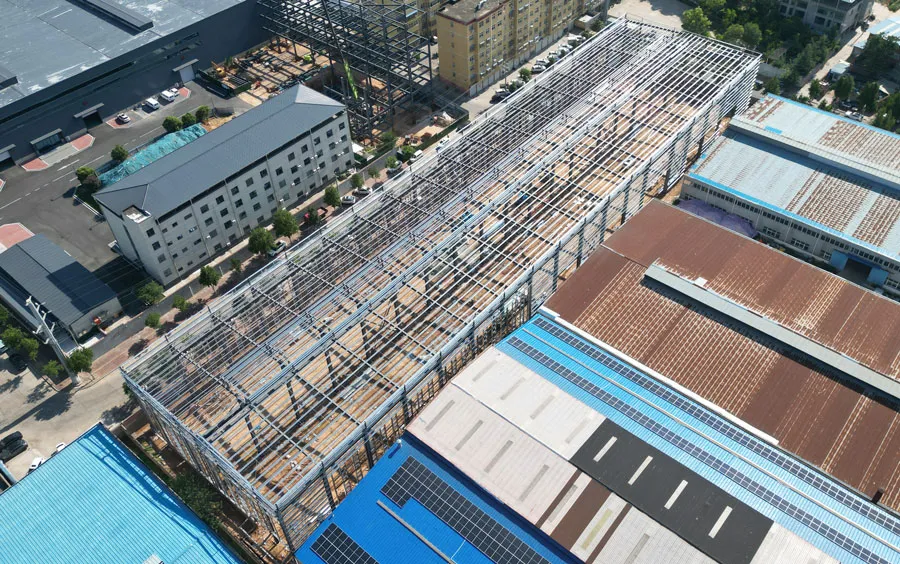
Steel Structure Workshop Solutions
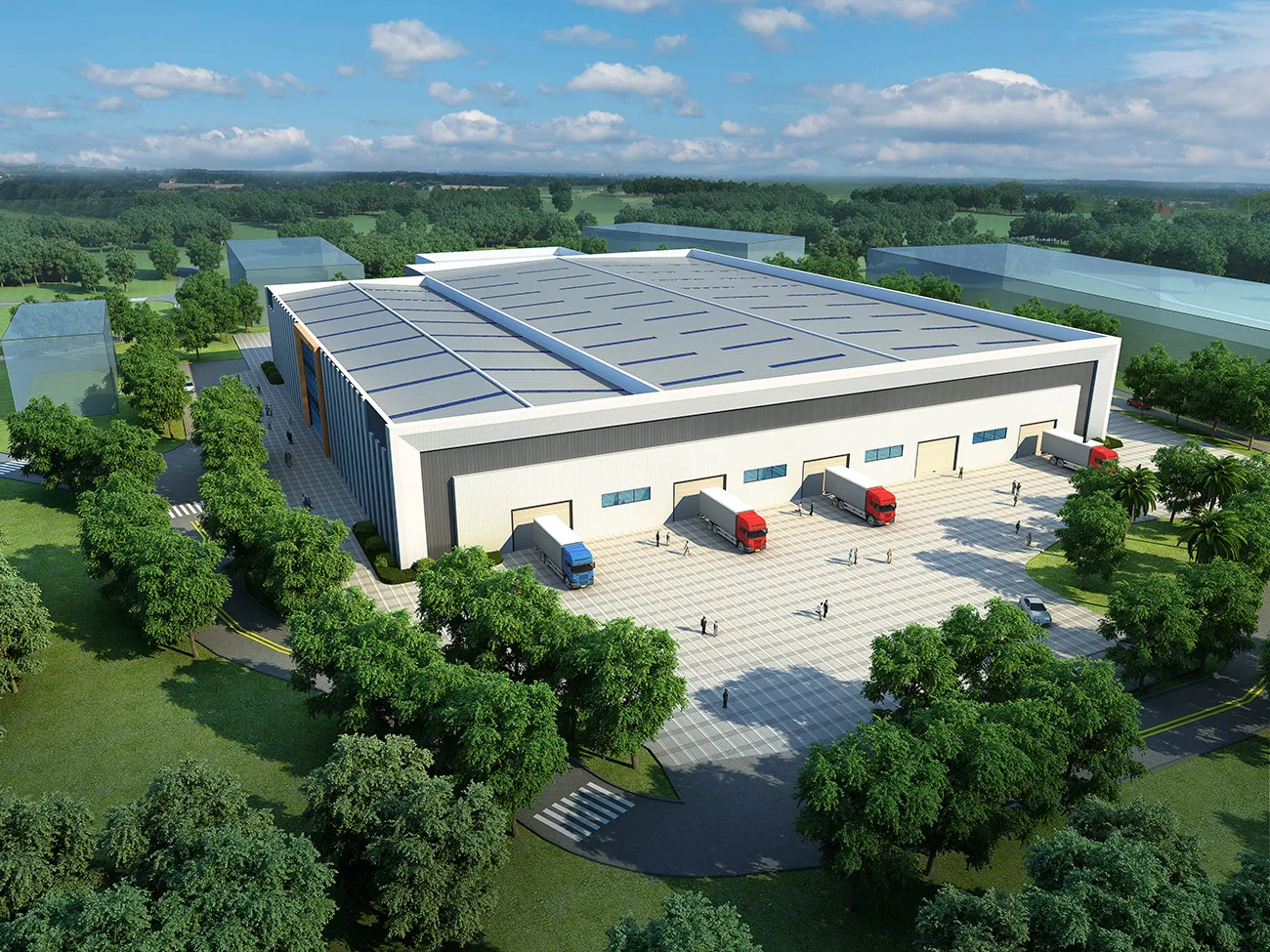
Steel Warehouse Solutions
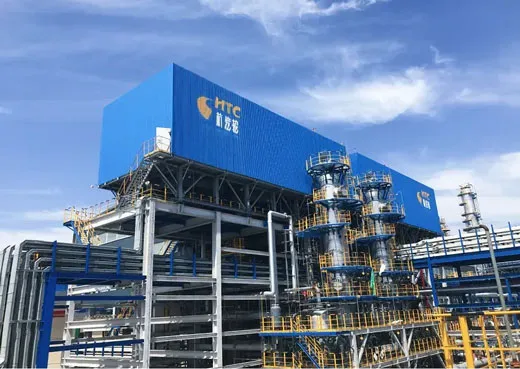
Heavy Steel Structures for Equipment
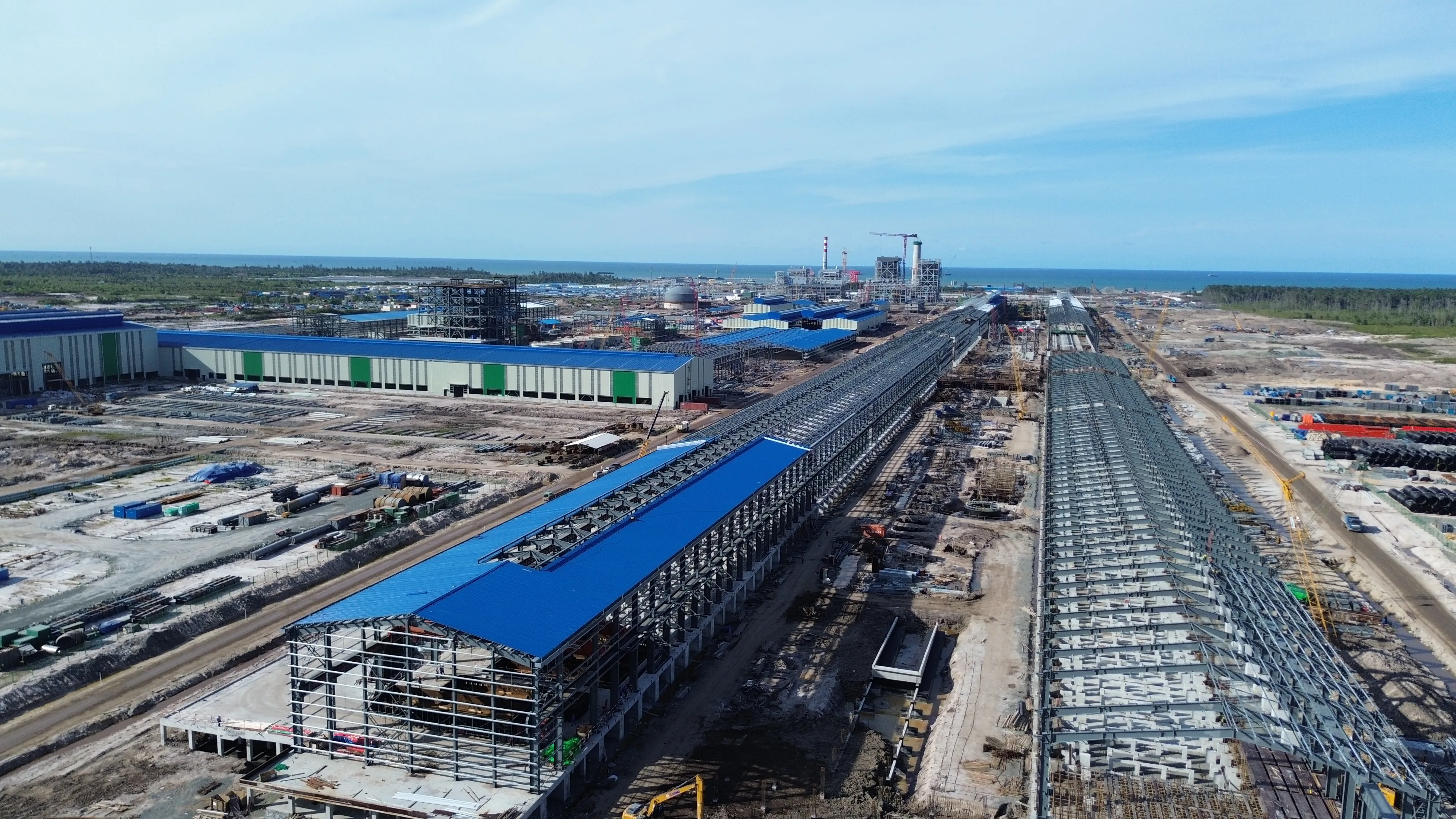
Indonesia North Kalimantan Aluminum Plant Project
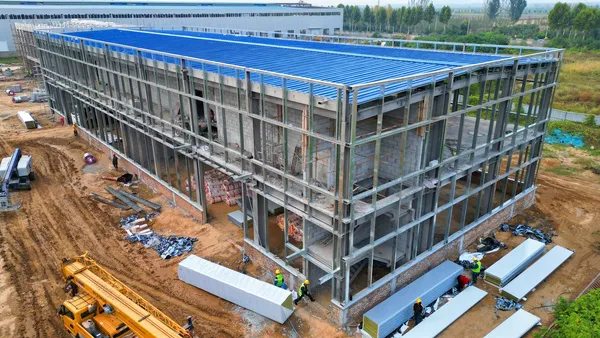
Steel Structure Factory and Warehouse Project for a Material Processing Production Base
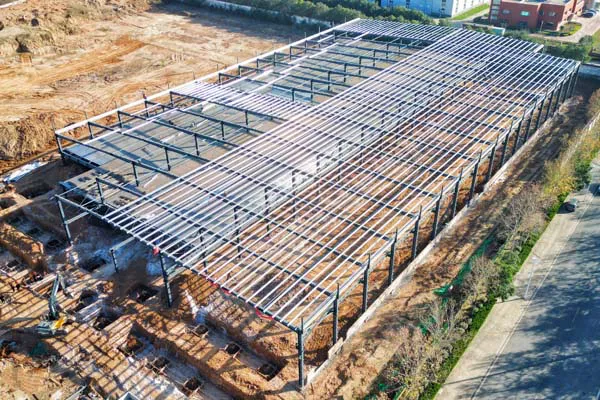
Luoyang Haode Auto Parts Steel Structure Factory Project
Automated Glass Production Line Steel Structure Factory Building Project
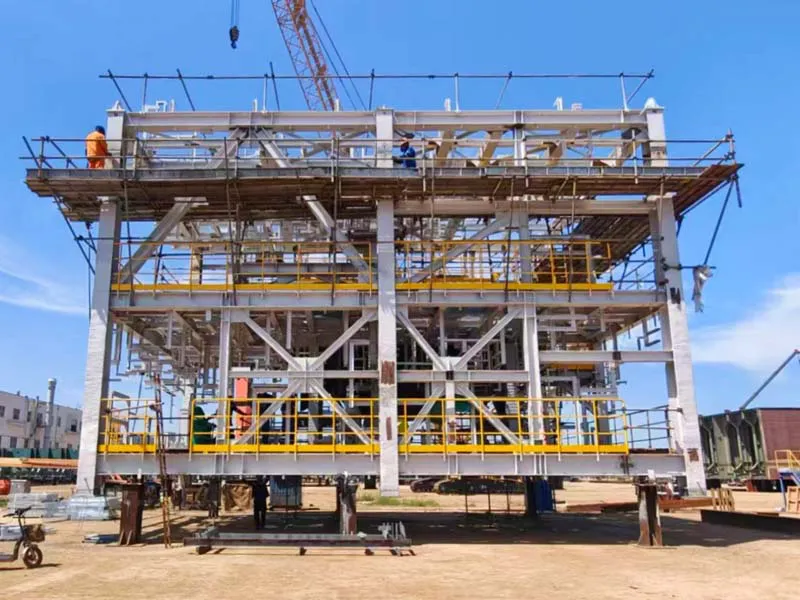
Oil & Gas Modular Steel Structure Fabrication Project