Time:2026-11-16 03:10:18 Source:Sanjian Meichen Steel Structure
Sustainable industrial design is no longer a trend—it is a fundamental requirement for manufacturers who seek to reduce environmental impact while maintaining operational efficiency. At the heart of this shift lies the choice of building materials. Steel structures have emerged as a cornerstone of eco-friendly industrial construction, offering exceptional durability, recyclability, and design flexibility. This article explores the critical role that steel plays in achieving sustainability goals, and how MeiChen Steel provides tailored solutions to help industries build greener, more efficient facilities.
Industrial facilities account for a significant portion of global energy consumption and greenhouse gas emissions. As regulations tighten and stakeholders demand accountability, designers and owners are turning to materials that minimize environmental footprint throughout the building lifecycle. Steel, with its high strength-to-weight ratio and near-infinite recyclability, is uniquely positioned to meet these demands. Unlike concrete or wood, structural steel can be reused multiple times without degrading its properties, making it a truly circular material. Furthermore, modern steel production has significantly reduced carbon emissions through electric arc furnace technology and recycled content.
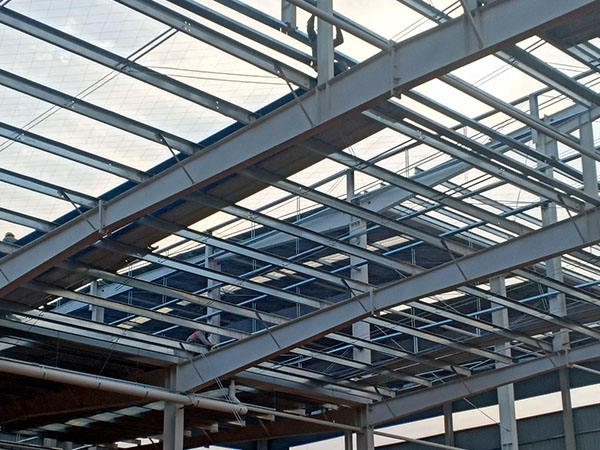
The sustainability of steel structures goes beyond recycling capability. Several intrinsic characteristics make steel the preferred choice for green industrial design:
From raw material extraction to end-of-life, steel scores favorably in lifecycle assessments. The World Steel Association reports that the global steel industry has reduced CO₂ emissions per ton of steel produced by over 60% since 1960. When combined with high recycled content (up to 90% for structural steel), the embodied carbon of a steel-framed building can be up to 40% lower than a reinforced concrete alternative. This data is critical for companies seeking LEED, BREEAM, or other green certifications.
Industrial facilities must accommodate changing production lines, equipment upgrades, and expansion. Steel’s modular nature allows for easy addition of new bays or mezzanine levels without major demolition. This adaptability prevents premature demolition and waste, aligning perfectly with the principles of circular economy. MeiChen Steel designs its structures with bolt connections and standardized components, enabling rapid reconfiguration when business needs shift.
Steel structures support a wide range of sustainable design strategies in industrial settings:
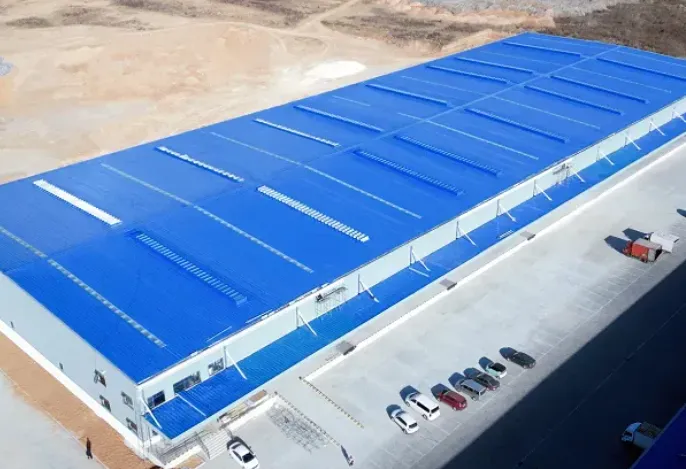
As a trusted provider of industrial steel structures, MeiChen Steel integrates sustainability into every project. Our engineering team works closely with clients to optimize steel usage, minimize waste during fabrication, and select eco-friendly coatings. We offer:
Our portfolio includes factories, warehouses, and distribution centers that have achieved LEED Gold or equivalent certification, proving that steel can be both strong and sustainable.
Sustainable industrial design requires a material that balances environmental responsibility with operational performance. Steel structures deliver on both fronts—offering unmatched recyclability, durability, and adaptability. By choosing MeiChen Steel for your next industrial project, you not only invest in a robust infrastructure but also contribute to a circular economy. Contact our team today to discuss how we can help you design a steel facility that meets your sustainability targets and budget.

