Is Your Steel Building Ready for Extreme Weather? Find Out
Time:2026-06-08 03:10:30
Source:Sanjian Meichen Steel Structure
Extreme weather events are becoming more frequent and intense—hurricanes with 150 mph winds, blizzards piling snow loads beyond design limits, and tornadoes that can peel roofs off in seconds. If you own or plan to invest in a steel building, the question is not whether it might face such conditions, but whether it is engineered to survive them. Many steel structures marketed as “heavy-duty” fail under real-world stress because of inadequate connections, thin gauge materials, or poor foundation integration. This article helps you assess your building’s readiness and understand what truly makes a steel structure resilient against nature’s worst.
The Growing Threat: What Are You Up Against?
Steel buildings are inherently strong, but extreme weather exploits every weak point. Consider the most common threats:
- High winds (hurricanes, tornadoes, straight-line winds): Uplift forces can tear off roof panels if the standing seam clips or fasteners are undersized. Side walls may bow inward if the girts lack proper bracing.
- Heavy snow loads: A collapsed roof under 4 feet of wet snow is not rare. The failure often starts at the purlin-to-rafter connection or at the ridge where unsupported spans buckle.
- Extreme temperature cycles: Thermal expansion and contraction can loosen bolts over time, especially in climates with dramatic day-night swings.
- Wind-driven debris: Even a well-built frame can suffer if the cladding is not impact-resistant. A single 2x4 at 100 mph can punch through thin metal panels.
Understanding these risks is the first step. The second is knowing how to verify your building’s defenses.
How to Tell If Your Steel Building Is Truly Weather-Ready
You don’t need an engineering degree to spot red flags. Use this checklist to evaluate an existing building or to ask the right questions when purchasing a new one:
- Check the building’s wind load rating: Ask for the design wind speed (e.g., 120 mph Exposure C). Many budget buildings are only rated for 90 mph—dangerously low for coastal or plains regions.
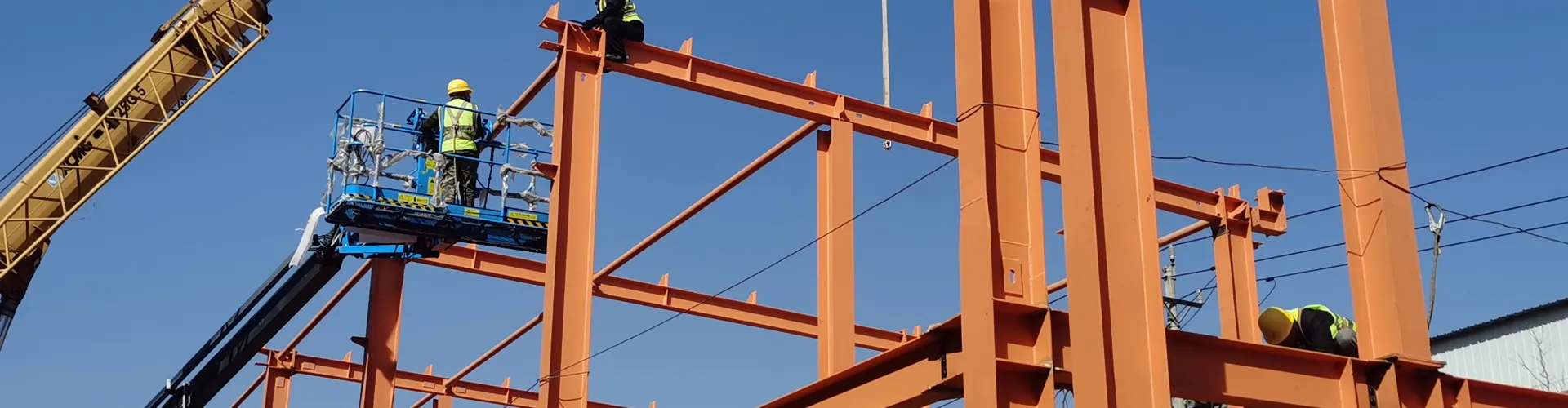
- Inspect the foundation anchors: Look for anchor bolts embedded in concrete. A building sitting on grade without deep footings can slide or tip.
- Examine connection details: Are beam-to-column plates bolted or welded? Do they use at least grade 5 bolts? Weak fasteners are a common failure point in extreme events.
- Verify the secondary framing: Purlins and girts should not be oversized or undersized. Thicker gauge (14-gauge or heavier) is preferred for roof members to resist uplift.
- Ask about snow load calculations: If you live in a snow zone, the building must meet local ground snow load codes (e.g., 40 psf or more). A generic “standard” design may not cut it.
Cheap vs. Resilient: The Critical Differences in Design and Materials
Not all steel buildings are created equal. The table below highlights where most cost-cutting happens—and why it matters for extreme weather:
- Steel gauge: Budget builders use 26-gauge roof panels (flimsy). MeiChen Steel specifies 24-gauge or heavier for the primary structure, with 26-gauge only for non-critical walls.
- Connection plates: Cheaper designs rely on clip angles with 3/8” bolts. Professional designs use moment-resisting connections with 5/8” high-strength bolts and stiffeners.
- Bracing system: Many “prefab” buildings omit interior cross-bracing to save on steel. A true weather-ready building includes both roof and wall bracing to transfer lateral loads.
- Roof slope: Flat roofs (1:12 pitch) are prone to ponding and collapse under snow. A minimum 4:12 slope reduces snow accumulation and improves water shedding.
- Wind uplift testing: Always ask if the roof panel system has been tested to UL 580 Class 90 or FM 4478. MeiChen Steel provides certified test data for all assemblies.
Why These Differences Matter
A building that saves 10% on material cost by reducing steel thickness may lose 100% of its value in a single storm. Inferior connections can lead to progressive collapse, pulling down the entire frame. By contrast, a building designed with MeiChen Steel’s engineering standards incorporates redundancy at every load path—from the foundation anchor to the ridge cap.
MeiChen Steel: Engineered to Stand Firm Against Extremes
With decades of structural steel fabrication experience, MeiChen Steel designs each building to the specific climate conditions of its site—not a one-size-fits-all approach. Every project begins with a site-specific load analysis that accounts for wind, snow, earthquake, and thermal factors. The materials we use:
- Primary steel frames: ASTM A992 or equivalent, with minimum yield 50 ksi.
- All connection bolts: Grade 5 or higher, zinc-plated for corrosion resistance.
- Roof and wall panels: 24-gauge to 22-gauge, with optional impact-resistant coating.
- Custom bracing: Portal frames or X-bracing designed per ASCE 7 standards.
Beyond the physical components, MeiChen Steel offers on-site reinforcement inspection and upgrade packages for existing buildings. Whether you need a new structure that can survive Category 5 hurricane winds or want to retrofit a current building for added snow load capacity, our team provides certified engineering documentation that local building inspectors require.
Take the Next Step: Verify and Upgrade
Extreme weather is not a matter of “if” but “when.” A steel building that appears solid on the surface may hide critical vulnerabilities. Start by reviewing the checklist above with your current structure, or ask your supplier for specific test reports. For those ready to move forward with peace of mind, MeiChen Steel offers a free building readiness consultation—including a site-specific risk assessment and a quote for any necessary upgrades. Don’t wait for the next storm to test your building. Prepare it today.